RGAA/WCAG Audits: diagnose and secure the compliance of your interfaces
Identify critical non-compliance issues in your user journeys and eliminate the risk of penalties, while ensuring universal access to your digital services.

How to turn accessibility audits into a lever for performance and compliance?
Organizations must now:
- Comply with strict legal requirements (RGAA 4.1 for the public sector, WCAG 2.2 for private companies), or face financial and legal penalties.
- Protect their reputation: non-compliance exposes organizations to reputational risks, especially for public sector actors and large enterprises.
- Optimize user experience: accessibility improves satisfaction for all users, including those without disabilities.

Three critical challenges emerge:

Legal and
financial risks:
Non-compliance fines can reach €20,000 (public sector), not including the cost of user lawsuits or emergency compliance efforts.

Blocked user journeys:
Accessibility errors on key pages (forms, conversion funnels, customer areas) degrade the experience and reduce engagement.

Lack of visibility:
Without a structured audit, it’s impossible to prioritize fixes and measure the impact of actions taken.
Our solution:
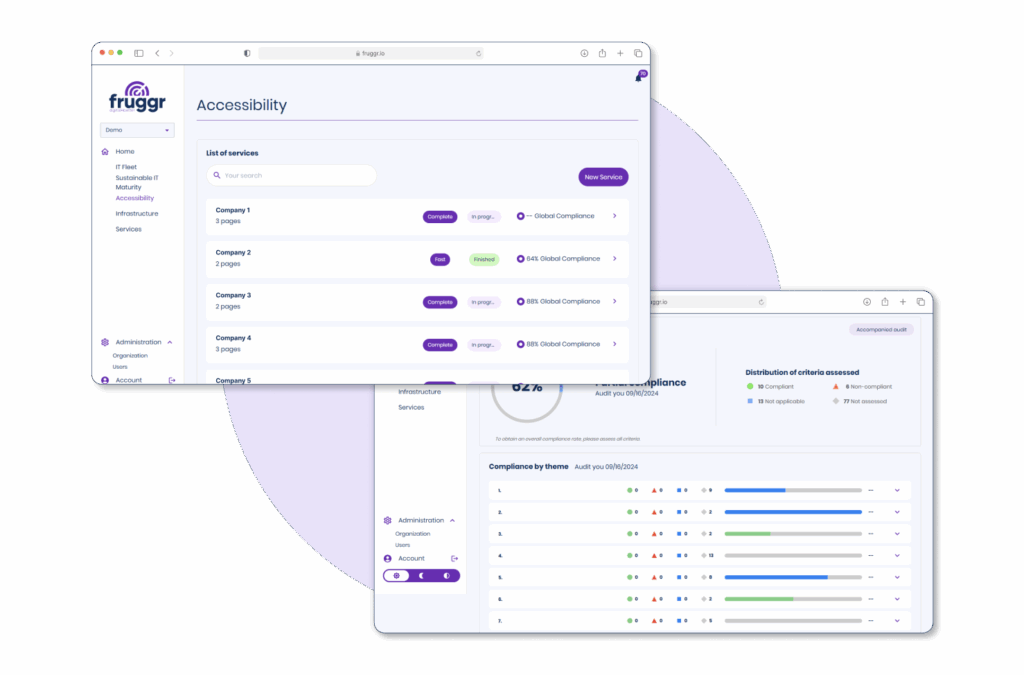
Comprehensive, actionable RGAA/WCAG audits
Fruggr offers a precise and rapid diagnosis of your interfaces, focused on your critical user journeys, to identify non-compliance issues and associated risks.
Key features
- Targeted audit:
In-depth analysis of your strategic pages and journeys (homepage, forms, customer areas, etc.), using RGAA- and WCAG-aligned methodology.
- Blocker detection:
Identification of critical errors (level A and AA) that impact service access, with technical evidence and screenshots.
- Prioritized report:
List of non-compliance issues ranked by risk level (legal, user, technical) and effort required for correction.
- Concrete recommendations:
Detailed correction sheets for technical and business teams, with code examples and best practices.
Your benefits

Secured legal compliance:
Avoid penalties and lawsuits by demonstrating your commitment to accessibility.

Optimized user experience:
Improve satisfaction and engagement for all users, including people with disabilities.

Cost reduction:
Prioritize fixes based on impact for targeted, effective investments.
They improved their IT performance with Fruggr