Upskilling teams: train your designers and developers in digital inclusion
Don’t just fix issues turn every audit into a learning opportunity to embed a culture of accessibility within your teams.

How can you make accessibility a professional
reflex rather than a one-off constraint?
Organizations today must:
- Shift from reactive fixes to proactive prevention by integrating best practices from the design phase.
- Reduce recurring costs tied to audits and late-stage corrections, which are often avoidable with proper training.
- Strengthen team engagement by equipping them with the knowledge to understand and apply RGAA/WCAG standards.

Three major challenges arise:

Lack of awareness:
Technical and business teams often underestimate the importance of accessibility, limiting their commitment and involvement.

Ineffective theoretical training:
Generic training fails to provide practical application of RGAA/WCAG rules in real project contexts.

Turnover and loss of expertise:
Without documenting lessons learned, best practices disappear with staff changes or reorganizations.
Our solution:
Integrated, hands-on upskilling programs
Fruggr helps you train your teams in digital inclusion best practices,
leveraging your audits and real-world projects.
Key features
- Practical workshops:
Training sessions based on your own interfaces and audit findings for immediate, contextualized learning.
- Educational toolkits:
Quick-reference guides, checklists, and compliant code examples tailored to your technologies (React, Angular, etc.) and user journeys.
- Lessons learned repository:
An internal knowledge base fed by past audits, corrections, and validated best practices.
- Progress tracking:
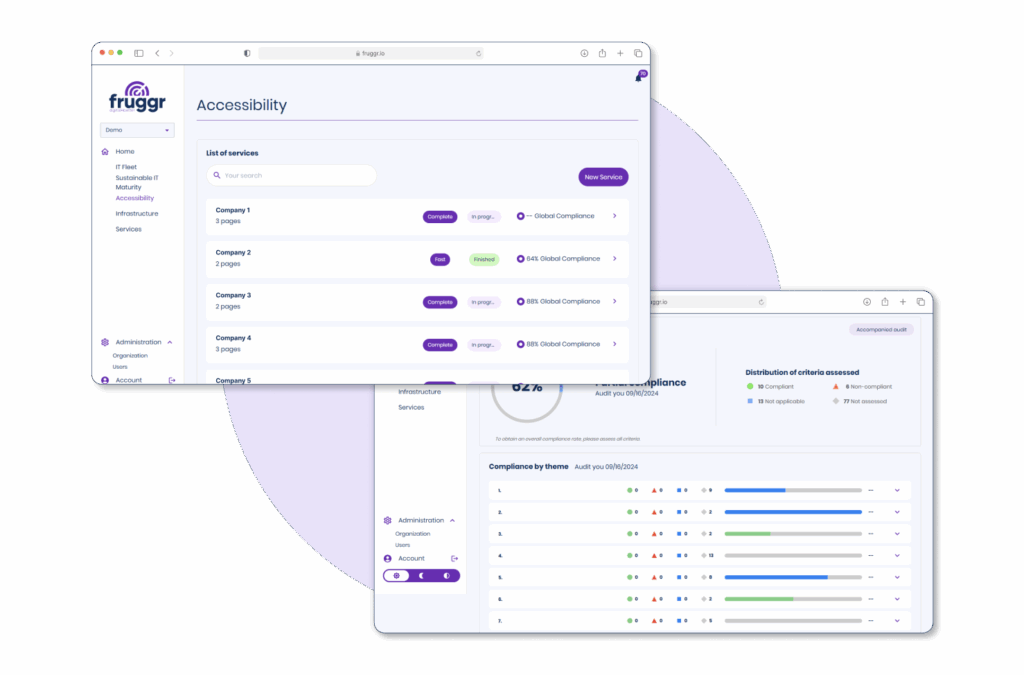
A skills development dashboard with individual and team metrics (compliance rate of deliverables, training participation).
Your benefits

Reduced cost of
poor quality:
Fewer corrections needed thanks to native integration of accessibility rules from the design phase.

Team autonomy:
Designers and developers capable of delivering compliant interfaces without constant reliance on external experts.

Sustainable culture of inclusion:
A collaborative, educational approach that strengthens long-term commitment across the board.
They improved their IT performance with Fruggr