
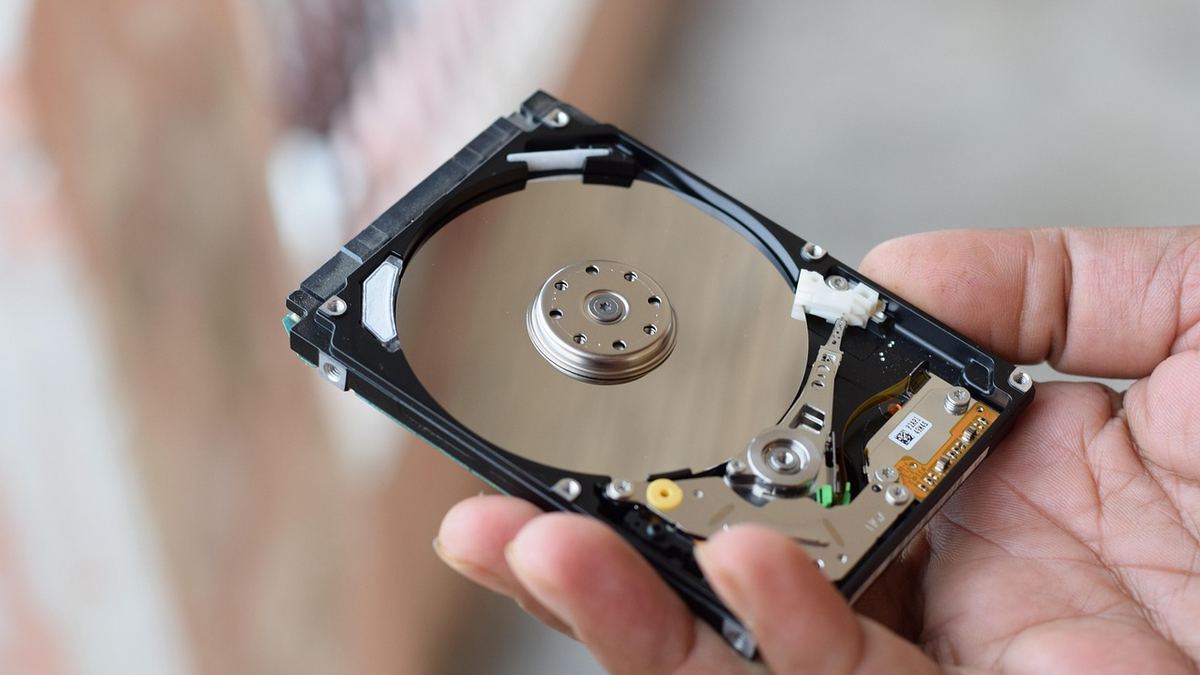
Data destruction means making stored data infeasible to recover before storage media leaves your control. NIST SP 800-88 Rev. 2, published in September 2025, defines three methods: Clear, Purge and Destroy. Insurers choose the lightest method that fits the data’s sensitivity, keep a certificate of sanitization for every asset, and reuse the hardware whenever the method allows.
A retired claims laptop that still holds policyholder files is not a simple asset write-off. It is nonpublic information outside your control, and an examiner reviewing your disposal procedures is likely to ask for the record of what you did, not what you intended. Many insurers answer by shredding everything. That closes the data risk, but it also destroys hardware that could be reused, and it adds to the 62 million tonnes of electronic waste the world generated in 2022.
What does NIST SP 800-88 Rev. 2 actually require?
NIST published SP 800-88 Rev. 2, Guidelines for Media Sanitization in September 2025. It supersedes Rev. 1 from December 2014. NIST defines media sanitization as making access to the target data “infeasible for a given level of effort.” Rev. 2 moves away from a table of media-specific techniques and toward a sanitization program, and its FAQ lists what that program needs, including documentation and evidence such as certificates of sanitization.
The decision flow weighs the sensitivity of the data and whether the media will be reused inside or outside your organization. That second question is what lets a risk team stop treating destruction as the default.
| Method | What it does | Typical insurer use | Hardware reuse |
|---|---|---|---|
| Clear | Logical overwrite of user-addressable space with standard read/write commands, typically one pass | Laptop redeployed to another employee, lower-sensitivity data | Yes |
| Purge | Stronger logical or physical techniques, including cryptographic erase; degaussing counts as a purge for legacy magnetic media | Storage arrays and drives that held claims, underwriting or health data and will leave your control | Often |
| Destroy | Physical techniques such as disintegration, incineration, melting, pulverizing or shredding | Failed drives that cannot be wiped, highest-sensitivity media | No |
The FAQ separates verification, which checks that the technique finished without errors, from validation, which decides that the result is acceptable for the data’s sensitivity. A certificate that records only “wiped” skips the second step.
One caution for shredding programs. The FAQ states that shredding and pulverizing are ineffective for medium- and high-security data on some media and points to incineration-type methods for non-magnetic media. Read it against your own media types before you write a shredding standard into policy (verify current text).
When is cryptographic erase enough?
Cryptographic erase destroys the encryption keys instead of the data, which makes it fast and keeps the device reusable. NIST’s FAQ attaches conditions. It requires FIPS-validated cryptography, and no sensitive data can have been stored on the media in plaintext before the keys were established. The FAQ adds that cryptographic erase is often the only viable purge method for cloud storage.
For an insurer, that turns an encryption date into a disposal decision. A laptop fleet with full-disk encryption enforced from first boot qualifies for cryptographic erase plus verification. A server encrypted three years after go-live does not, because plaintext claims data was written before the keys existed. Your asset inventory needs a field that records the date encryption was enabled for each device.
Which US and Canadian rules point to secure disposal?
Each rule below sets the outcome and leaves the method to you. Pairing your procedure with NIST SP 800-88 Rev. 2 gives an examiner a recognizable method standard.
- NAIC Insurance Data Security Model Law (#668): Section 4D(2)(k) requires licensees to develop, implement and maintain procedures for the secure disposal of nonpublic information in any format. Section 4F requires due diligence when selecting third-party service providers, which includes an IT asset disposition vendor. States adopt the model individually, so check each state where you hold a license.
- New York: 23 NYCRR 500.13(b) requires policies and procedures for the secure disposal, on a periodic basis, of nonpublic information that is no longer necessary for business operations, unless law requires retention or targeted disposal is not reasonably feasible. Section 500.13(a) also requires an up-to-date inventory of information systems.
- Federal FTC rules: the Safeguards Rule, 16 CFR 314.4(c)(6), sets disposal no later than two years after the information was last used, with exceptions for business need, legal retention and infeasible targeted disposal. The Disposal Rule, 16 CFR 682.3, calls for destruction or erasure of electronic media so the information cannot practicably be read or reconstructed. State insurance regulators normally supervise insurers, so treat these as benchmarks and confirm applicability with counsel.
- Canada: PIPEDA Schedule 1 says personal information no longer required for the identified purposes should be destroyed, erased or made anonymous (clause 4.5.3), and that care shall be used in disposal or destruction (clause 4.7.5). Quebec and other provinces with their own private-sector privacy laws add duties of their own (verify current text).
When does reuse beat shredding?
The UN Global E-waste Monitor 2024 puts global e-waste at 62 million tonnes in 2022, up 82% from 2010. Only 22.3% was documented as formally collected and recycled, and the report expects that share to fall to about 20% by 2030 as volumes approach 82 million tonnes. Small IT and telecom equipment such as laptops and routers made up about 4.6 million tonnes, with 22% documented. Roughly US$91 billion in metals sat inside that waste, and US$28 billion was recovered.
Reuse also cuts the manufacturing emissions that land in Scope 3. Fruggr’s article on refurbished devices cites an ADEME estimate that buying a refurbished phone cuts its annual environmental impact by 55% to 91%, depending on the model. Fruggr’s explainer on how Scope 3 evaluates IT footprint shows where purchased hardware sits in your inventory.
The practical rule is to map each asset class to the lightest method that still meets the data’s sensitivity:
- Employee laptops with encryption since first boot: cryptographic erase, verification, then redeploy or resell.
- Laptops encrypted late, or with no encryption record: Purge by a method suited to the media, or Destroy if you cannot verify the result.
- Storage arrays that held claims or health data: Purge and verify before the array leaves your control, with Destroy for failed units.
- Failed drives that cannot complete a wipe: Destroy, using a method suited to the media type.
- Cloud storage: cryptographic erase through your provider’s key controls, with the evidence retained.
What should each certificate of sanitization record?
The NIST FAQ lists certificates of sanitization as a required policy element. A certificate an examiner can test records these fields:
- Asset ID and serial number, tied to your asset inventory.
- Media type, capacity and the data classification at retirement.
- Method (Clear, Purge or Destroy) and the specific technique.
- Tool name and version, or the destruction process used.
- Verification result, and who validated that the result suits the data’s sensitivity.
- Date, location and operator.
- Reuse outcome: redeployed, resold or recycled.
The last field is the one most programs lack. Without it you cannot report how much retired hardware you reused, and you cannot show that the destruction rate matches the risk.
How should you oversee the disposal vendor?
An outside vendor is a third-party service provider under NAIC Section 4F, so your due diligence file should show what you checked. Ask the vendor to sanitize to NIST SP 800-88 Rev. 2, return a per-asset certificate with the fields above, report reuse and recycling outcomes by asset class, and allow you to audit the process. Send the certificates to the same system that holds your asset inventory so the record of ownership and the record of disposal stay linked.
Five actions for this week
- Pull the last 12 months of retirement records and check that each asset has a certificate of sanitization.
- Classify retiring media by data sensitivity and map each class to Clear, Purge or Destroy.
- List the laptop and server models where encryption was enabled from first use; these are your cryptographic erase candidates.
- Add a reuse-outcome field to the certificate and to the asset inventory.
- Re-read your vendor contract against NAIC Section 4F and the NIST SP 800-88 Rev. 2 program elements.

Key takeaways
- NIST SP 800-88 Rev. 2 (September 2025) sets three methods, Clear, Purge and Destroy, and asks for a sanitization program with verification, validation and a certificate for each asset.
- NAIC Model #668, 23 NYCRR 500.13 and PIPEDA all require secure disposal but leave the method to you, so a documented NIST-based procedure is your evidence.
- Matching the method to the sensitivity of the data keeps reusable hardware in service instead of adding to e-waste and Scope 3 emissions.
Next step: See how Fruggr measures the manufacturing and end-of-life footprint of digital equipment in its life-cycle assessment method.
FAQ
Data destruction is the process of making stored data infeasible to recover. NIST SP 800-88 Rev. 2 describes it through three methods: Clear, Purge and Destroy.
Not always. NIST’s FAQ states that shredding and pulverizing are ineffective for medium- and high-security data on some media, so match the method to the media type and the data’s sensitivity (verify current text).
Purge uses strong logical or physical techniques, including cryptographic erase, and can leave the media reusable. Destroy uses physical techniques such as incineration or melting and ends the media’s life.
The laws cited above require secure disposal procedures and leave the form of proof open. NIST SP 800-88 Rev. 2 lists certificates of sanitization as a policy element, and a per-asset certificate is the evidence an examiner can test.
Yes, after Clear or Purge when the data’s sensitivity and the verification result allow it. Destroy rules reuse out.
This article was drafted with AI assistance and reviewed by our editorial team before publishing.