Managing accessibility initiatives: from assessment to continuous improvement
Move from a one-off approach to strategic management of your compliance, with clear indicators and ready-to-use documentation for your official declarations.

How to turn accessibility into a controlled, sustainable process?
Organizations today must:
- Demonstrate compliance in a tangible way, especially for RGAA declarations (mandatory for the public sector) or internal audits.
- Track progress over time to justify investments and measure the impact of actions taken.
- Anticipate risks by identifying issues before they become critical.

Three major challenges emerge:

Lack of visibility on compliance:
Without centralized tracking, it’s impossible to know the status of each project, its blockers, or its progress.

Scattered or nonexistent documentation:
Compliance evidence is often dispersed (emails, local files, disparate tools), complicating audits and declarations.

Difficulty prioritizing actions:
Without clear indicators, teams struggle to allocate resources where they will have the greatest legal and user impact.
Our solution:
A dashboard for controlled accessibility management
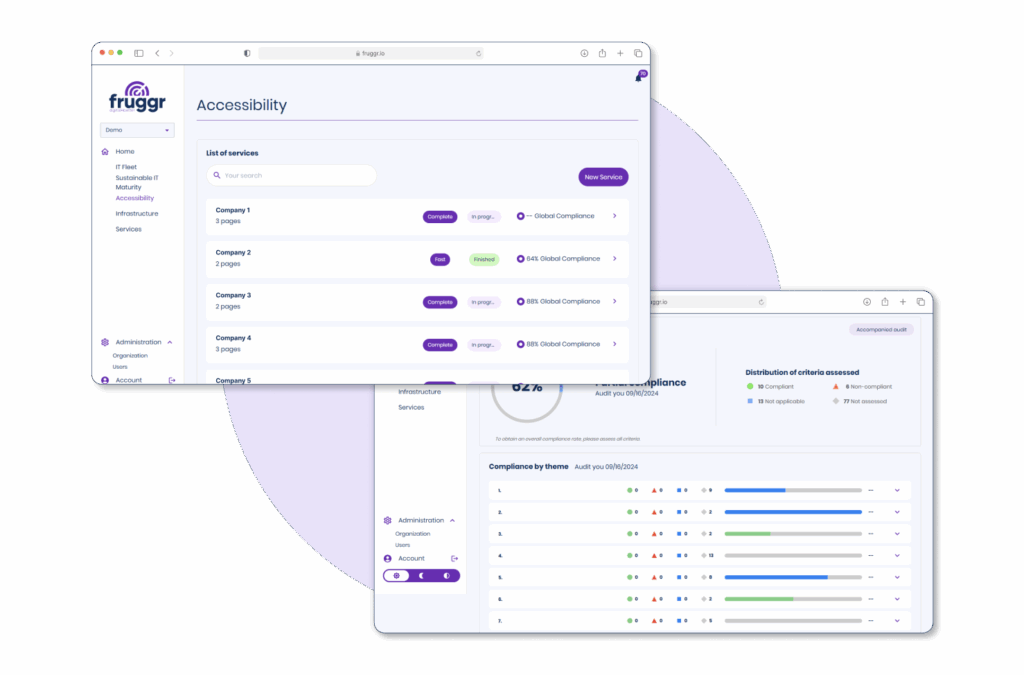
Fruggr provides a centralized platform to track your KPIs, document compliance,
and drive continuous improvement, aligned with RGAA and WCAG standards.
Key features
- Strategic dashboard:
Real-time monitoring of key indicators (compliance rate per project, number of critical non-compliance issues, correction timelines).
- Automated documentation:
Generate ready-to-use compliance reports for your RGAA declarations or internal/external audits.
- Alerts and recommendations:
Proactive notifications about compliance regressions, regulatory deadlines, and prioritized action suggestions.
- History and traceability:
Archive all versions, corrections, and decisions to demonstrate your long-term commitment.
Your benefits

Proven and documented compliance:
Reports ready for authorities (DGME, CNIL) or stakeholders, with a complete history of your initiatives.

Continuous improvement:
Measurable and communicable progress, with KPIs aligned to your business and CSR goals.

Risk reduction:
Anticipate non-compliance before it becomes critical, and justify investments with tangible data.
They improved their IT performance with Fruggr